
AR art is artwork made to be experienced through augmented reality: digital sculptures, animations, sound and video that appear in real places, on physical artworks or on people, seen through a phone or glasses. It lets artists exhibit anywhere, from streets and parks to landmarks, without building or shipping a physical piece.
Also known as: augmented reality art, AR artwork, digital art in AR, AR art installation
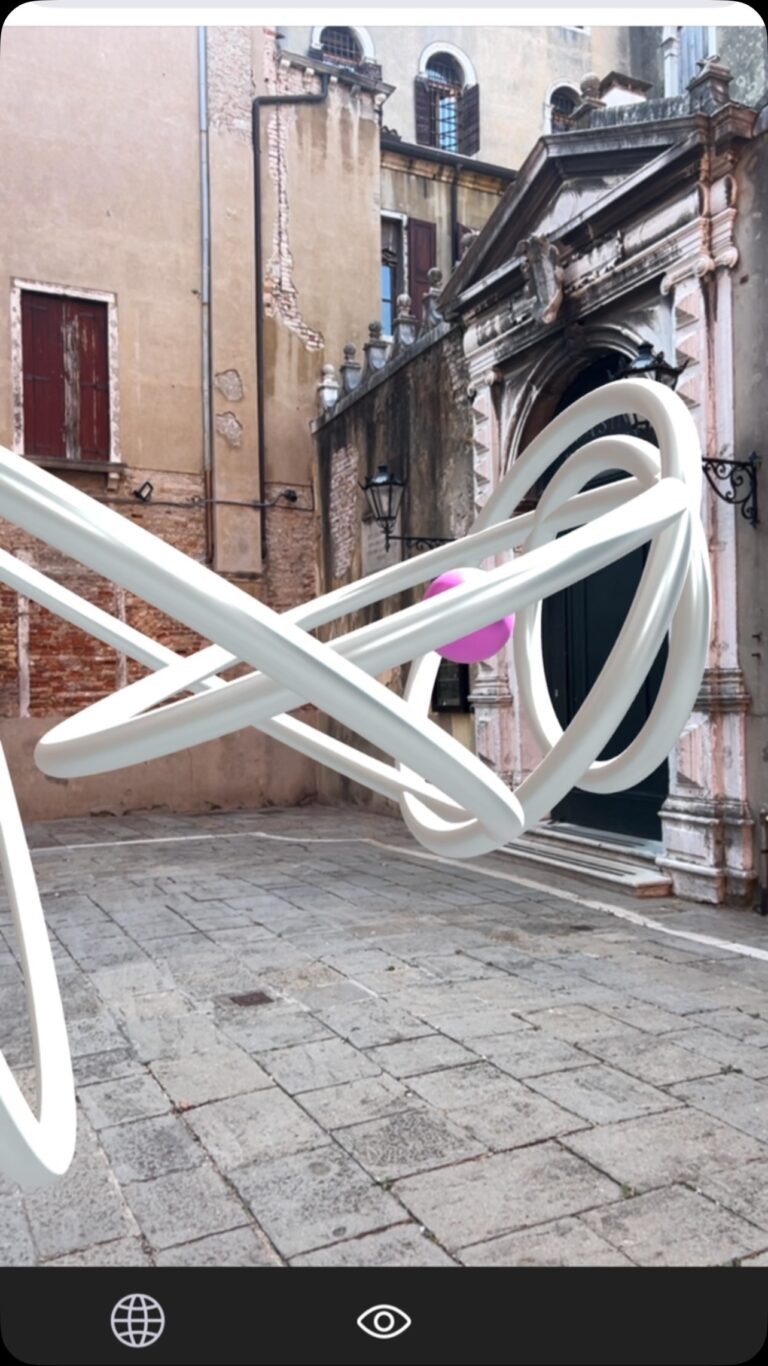
Augmented Liminalities, Venice, Italy, 2026

BF X PEACE, Bryant Park, New York, September 2025

ART OUT SIDE, Port Moody, Canada, 2025
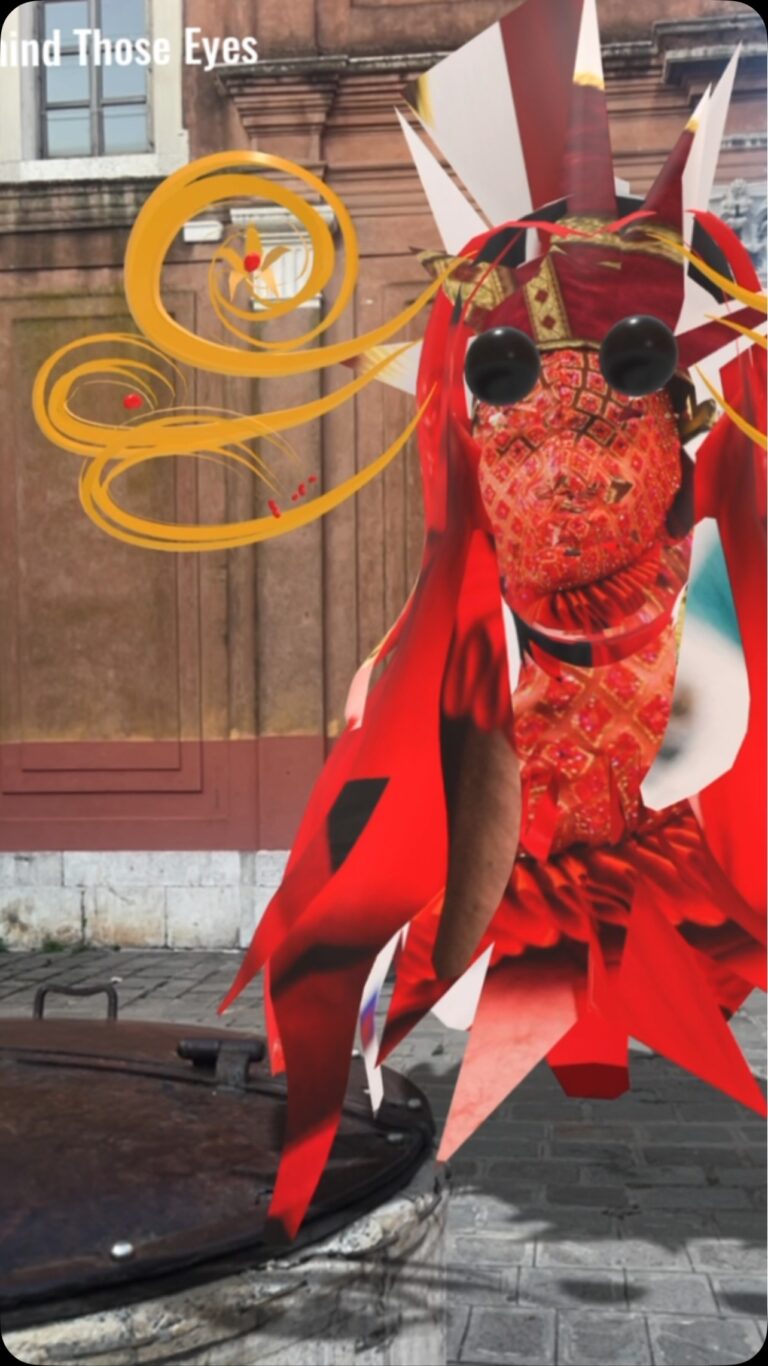
Augmented Liminalities, 2026
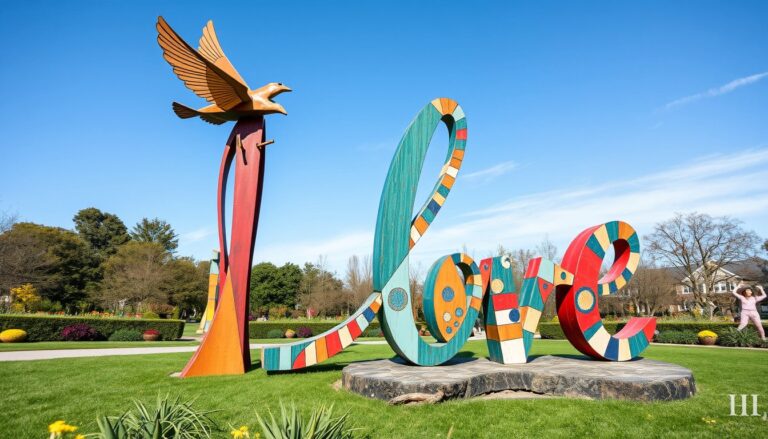
Krabbepark, Vlaardingen, the Netherlands, 2026
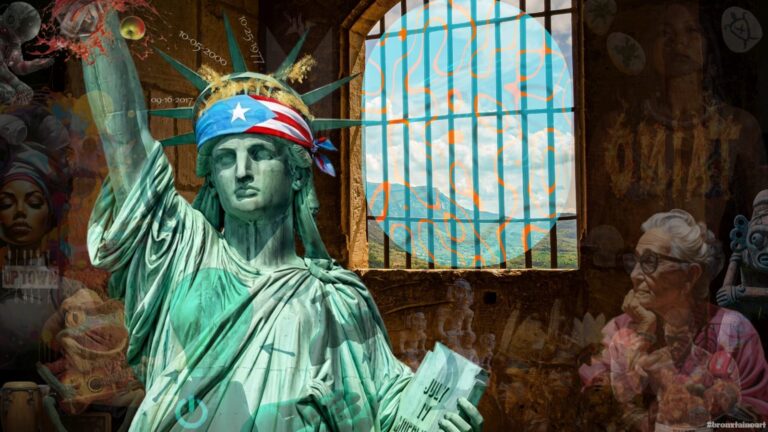
Liberty State Park, Jersey City, 2026
How it works
Artists create in 2D, video, sound or 3D, then anchor the work to a location, an image such as a painting or mural, or a face. Viewers find it by link, QR code or AR map. AR art spans gallery augmentation, public interventions, festival commissions and collectible editions.
How it works in illust
illust was built for AR art: artists use the AR Studio to place work anywhere, curators run exhibitions on it, and the placement service documents works at iconic locations with photos, video and a certificate.
Place your art in ARSee it in action: Balanced Forces exhibitions →
Key facts
- AR art has a 15+ year history: the Manifest.AR collective placed uninvited AR works inside MoMA in 2010 (Frieze, Jul 2026).
- William Forsythe's first AR artwork, Uplifting Instruction, debuted in 2026 (Frieze).
- Balanced Forces has run six AR community exhibitions on illust since 2025, including 40 works along Port Moody's Shoreline Trail (illust blog: Balanced Forces, ART OUT SIDE).
Watch

Related videos
- What is Illust? Publishing as an Artist to the Augmented Reality App.
- AR Demo Day: 7 AR Creators to Watch
FAQ
Do I need to know 3D to make AR art?
No. Many AR artworks are 2D images, animations or video placed in space. 3D (.glb) opens more options but isn't required.
Can AR art be sold?
Yes, as commissions, editions, licensed placements or documented works. Location certificates and on-site photography help collectors see where a piece has been shown.