
An AR mural is a painted or printed wall that comes to life through a phone: when the camera recognizes the mural, animation, 3D elements or sound appear on and around it. Most AR murals use image tracking, so the artwork itself is the trigger, often with a QR sign to open the experience.
Also known as: augmented reality mural, AR street art, AR graffiti, interactive mural, living mural

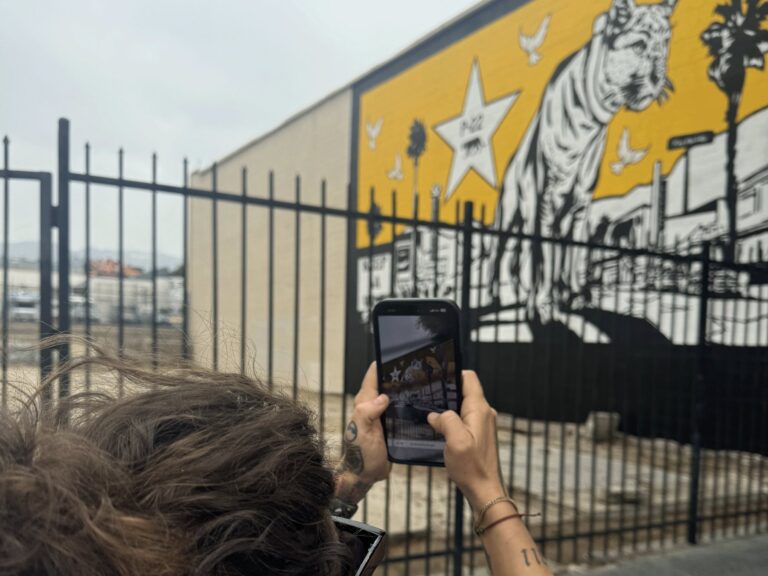
Scanning the mural to open its AR layer, Los Angeles, 2024
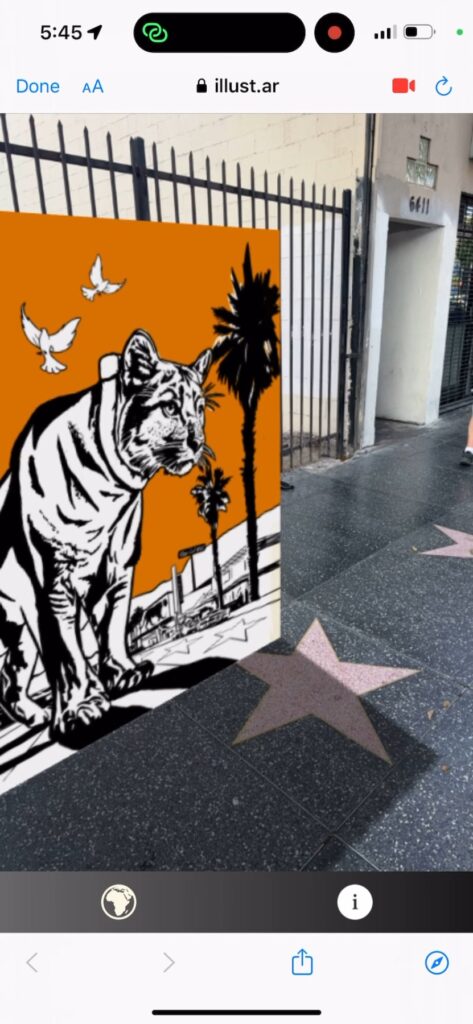
The artwork appears in the phone's browser, Hollywood, 2024
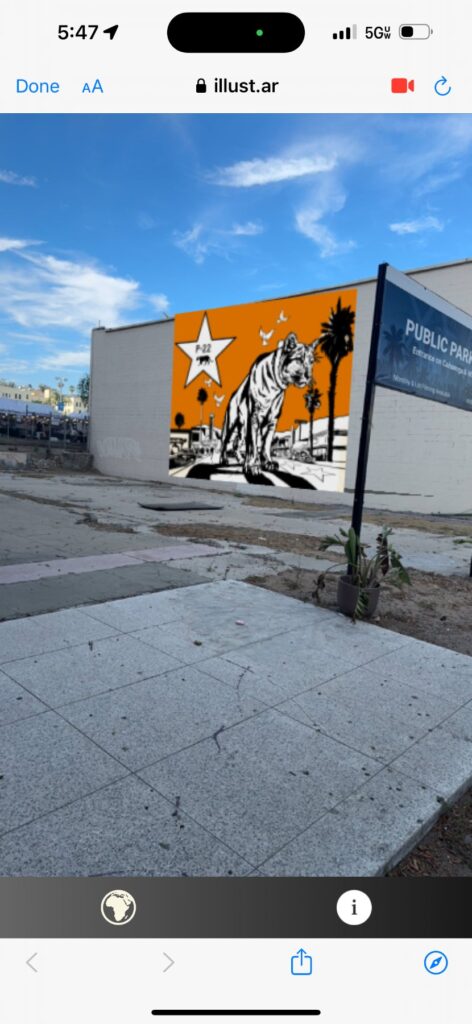
Opened in illust's web AR viewer, Los Angeles, 2024
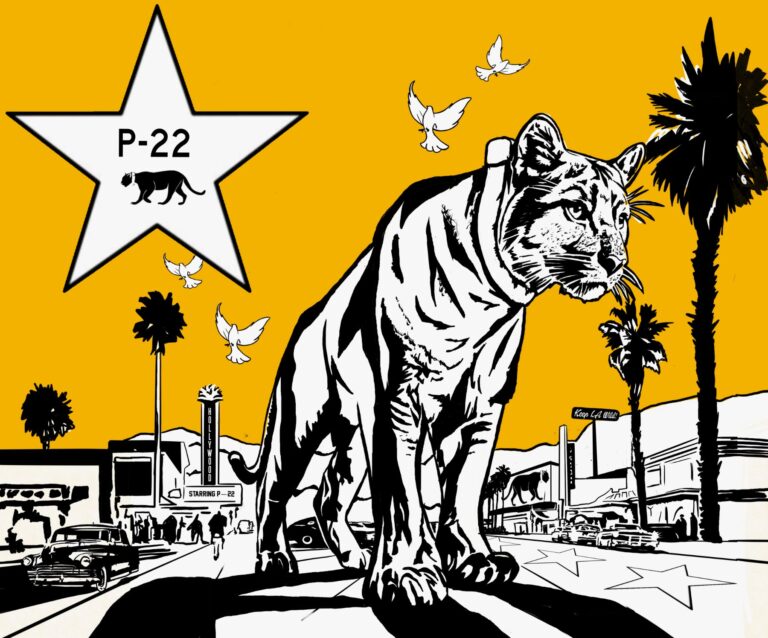
Corie Mattie, 2024
How it works
The artist designs the mural with AR in mind, photographs the finished wall straight on, and uploads that photo as an image target. Digital layers are aligned to the image so they pop off specific shapes. Location-based AR can add pieces around the wall that don't depend on scanning it.
How it works in illust
With illust's Image Target AR, muralists upload a photo of the wall and attach 3D, video or audio; World AR can add sculptures around it. Denver Walls used illust for AR public art across the city.
“Illust was essential in bringing our mural campaign to life. They helped make a seamless access point for visitors and immersive AR activation. Truly an amazing creative partner.”
Josiah Jones, artist manager for Corie Mattie
Key facts
- Image recognition relies on contrast, so detailed murals scan better than flat color fields.
- One European studio estimates about 15,000 EUR for a non-branded 30 square-meter AR mural including painting (Basa Studio).
More videos
FAQ
Can I add AR to a mural that's already painted?
Yes. Photograph it straight on in even light and use the photo as the image target.
Will the AR still work if the mural fades or gets tagged?
Small changes are usually fine; big changes can break recognition. Re-photograph the wall and update the target if it changes a lot.