
Site-specific art is made for one particular place, so its meaning depends on that location's history, architecture, light or community. Site-specific AR extends that tradition with augmented reality, layering stories or images onto the site itself so the work only fully makes sense when you stand there.
Also known as: site-specific AR, site-responsive AR, locative media, locative art
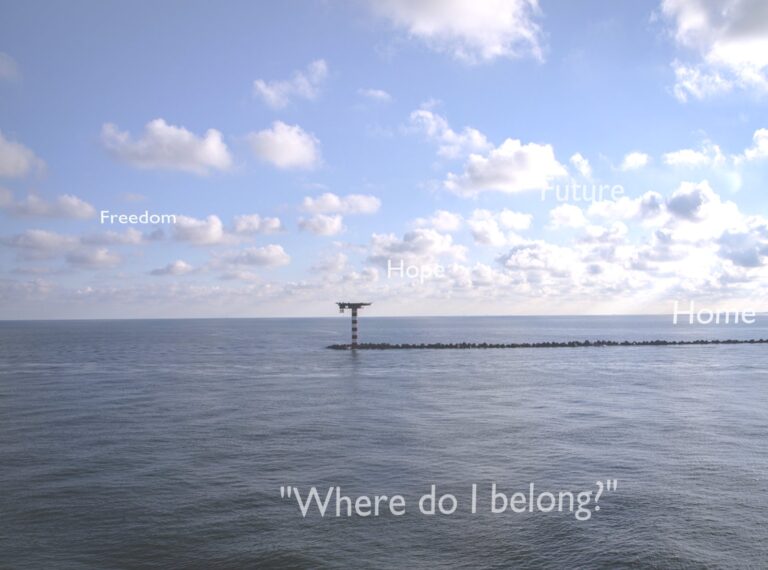
On the water at Liberty State Park, Jersey City, 2026

Above a construction site in Austin, Texas, March 2026
How it works
Artists research the site, design around sightlines and visitor paths, and anchor works to features like a monument, shoreline or skyline. Many projects reveal hidden histories or imagined futures of a place.
How it works in illust
illust's location-based placement and Image Target AR support site-specific work. Echoes of Freedom, for example, placed works about freedom and immigration with the Statue of Liberty in view.
Key facts
- Echoes of Freedom placed 20 artists' works about freedom, democracy, immigration and identity in Liberty State Park, with the Statue of Liberty and the New York City skyline behind them; it runs from July 4, 2026 to June 30, 2027 (illust blog: Echoes of Freedom).
- ARtivism brought 36 artists' AR works on the theme of subvertising to Austin, Texas, from March 13 to 18, 2026 (illust blog: ARtivism).
- MIT Open Documentary Lab's Layers of Place is a civic AR exhibition that uses location-based works to reveal hidden histories and speculative futures in Austin's public spaces (MIT Open Documentary Lab).
FAQ
Is site-specific AR the same as location-based AR?
Location-based AR is the technology; site-specific AR is an artistic approach: work that depends on its place, not just work that has been placed there.
Can site-specific AR travel?
The ideas can; the work is tied to its site. Some curators adapt pieces for each new location.