
Markerless AR places digital content in the world without needing a printed image or code to recognize. It relies on the device's understanding of surfaces and motion, and outdoors on GPS and compass, so content can appear on any floor, plaza or field.
Also known as: marker-less AR, instant tracking, SLAM-based AR

A floating whale by Drake Arnold in the Arizona desert: nothing to scan, just a place on the map
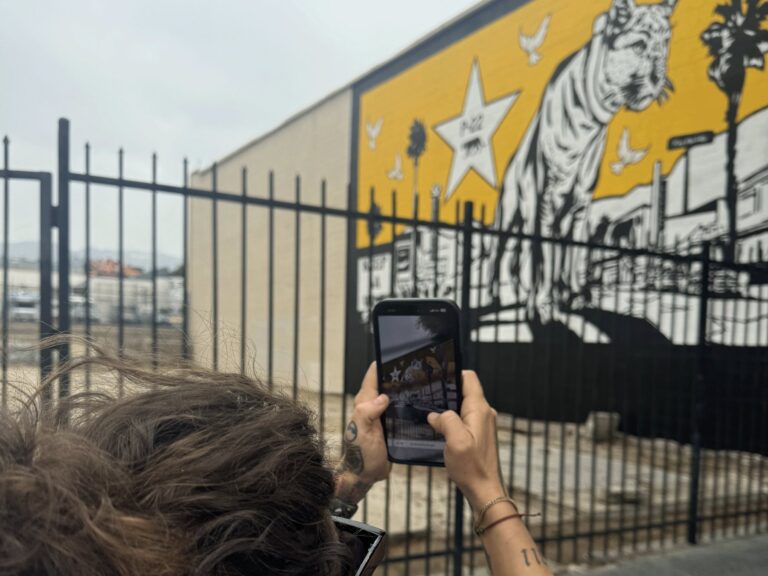
Corie Mattie's P-22 mural is the marker: the AR appears when the phone recognizes it
How it works
Instead of matching a known picture, the device detects surfaces and feature points with SLAM and anchors content to them. Location-based AR is a markerless approach that adds GPS to decide where the content belongs.
How it works in illust
illust's World AR is markerless: creators choose a location on the map, and visitors see the work there without scanning anything.
Key facts
- Researchers note that marker-based AR, though common, brings labour-intensive setups and restricts visitors' freedom to explore in large outdoor exhibitions, and propose markerless geospatial tracking instead (FH Upper Austria, Augmenting Murals).
- Without a marker, ARCore works out where the phone is by detecting visually distinct feature points in the camera image and combining them with the phone's motion sensors (Google ARCore documentation).
FAQ
Is markerless AR less accurate?
It can be. Markers give a precise reference point; markerless placement relies on GPS and visual tracking, which can be a few meters off outdoors.
When should I still use a marker?
When content must line up exactly with a physical object, such as animation over a mural or a label.
Is image target AR the same as marker-based AR?
Yes, in practice. An image target is a marker: a picture, mural or print the camera recognizes before the AR appears.