
An AR scavenger hunt is a game where players find virtual objects or clues placed at real locations or on images, using their phone camera. Linking several AR stops into a quest, with a map, check-ins and a reward at the end, turns a festival, campus or city into a playable space.
Also known as: AR treasure hunt, AR easter egg hunt, AR quest, location-based game
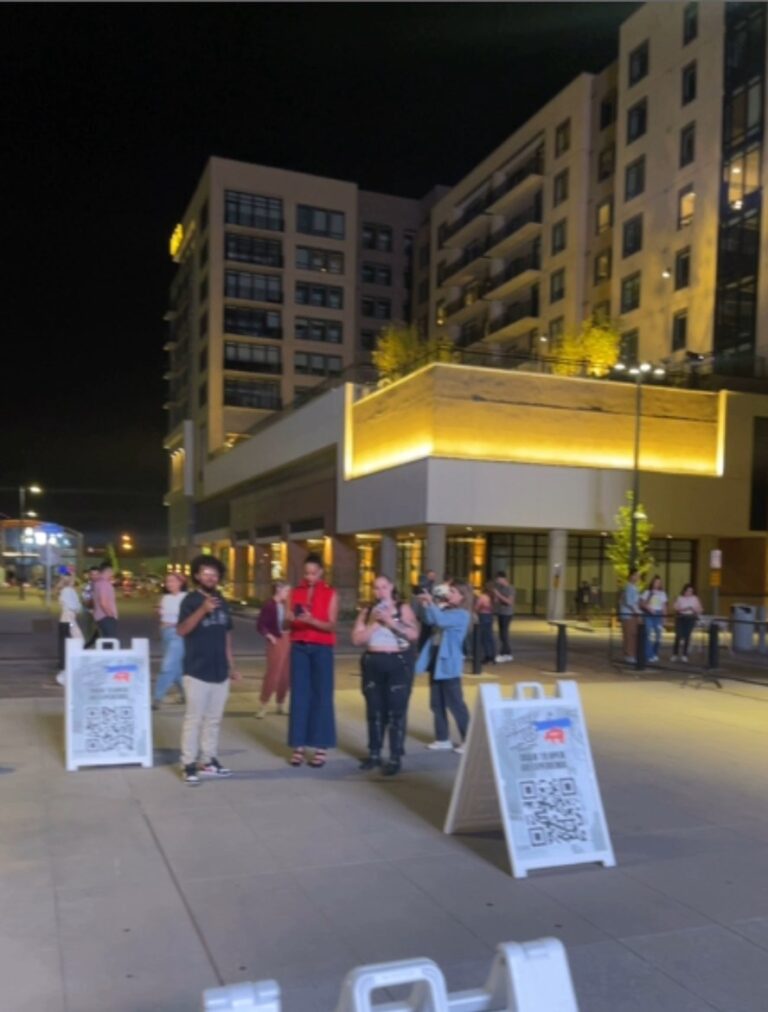
Visitors at the QR signs marking each stop, Denver, 2023
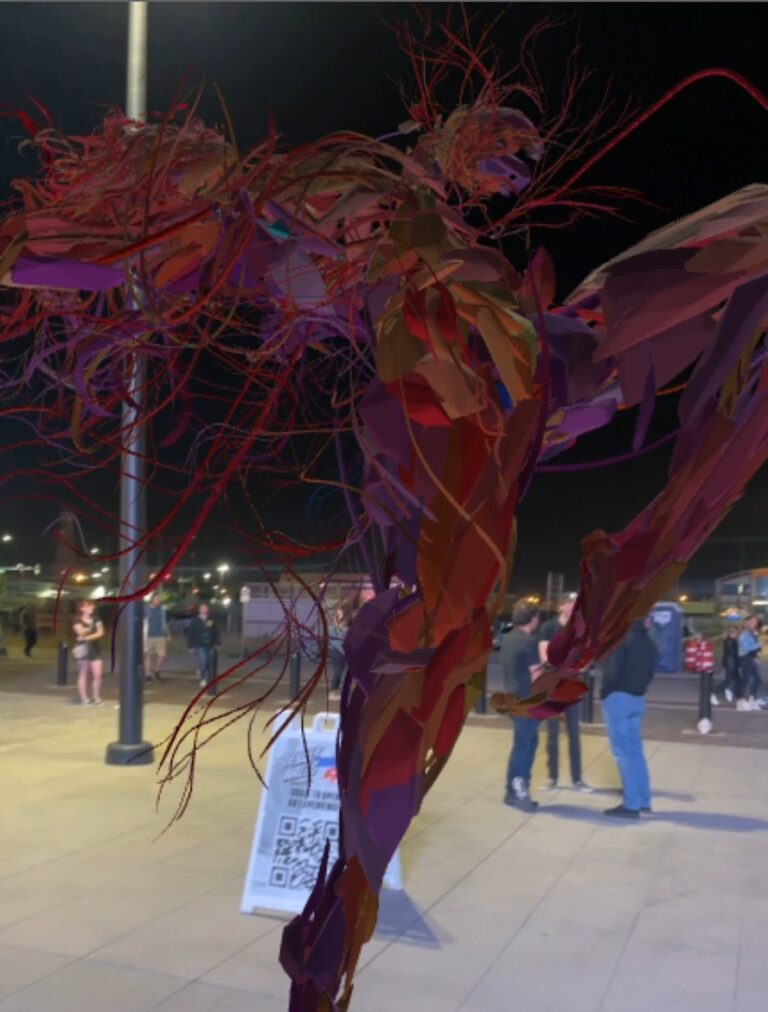
Found in AR outside Mission Ballroom, 2023
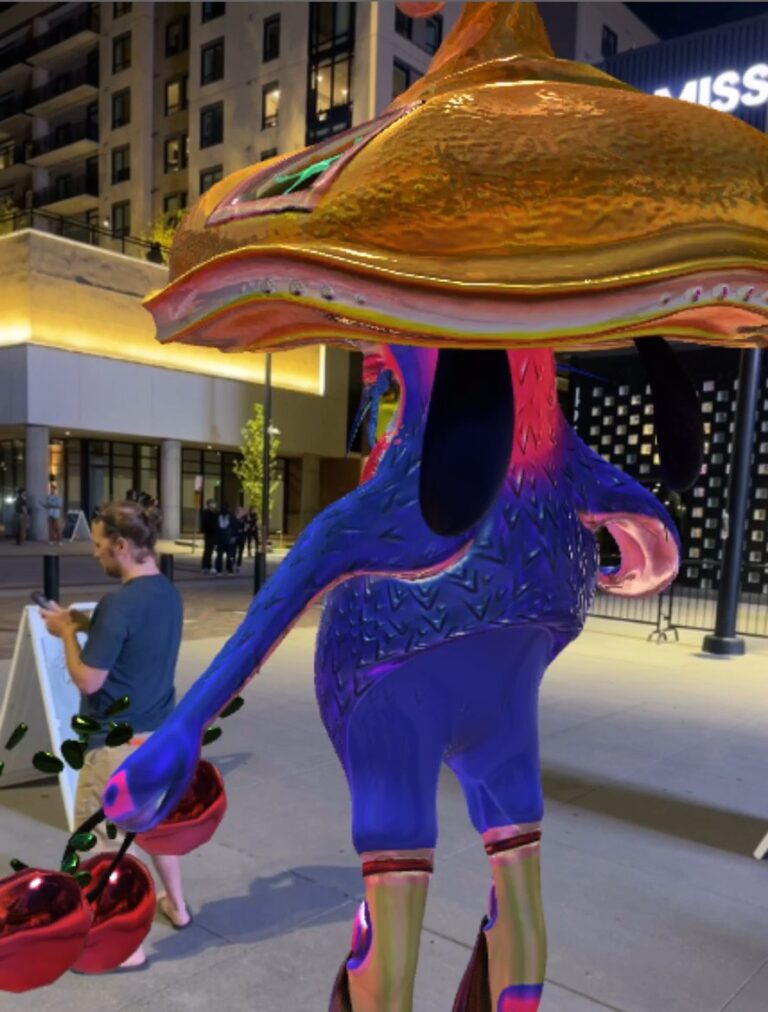
A visitor checks a QR sign beside an AR creature, 2023
How it works
Organizers place AR items at stops by geofence or image target, publish a map or clue list, and track progress with check-ins. Finishing can unlock a prize, discount or collectible.
Use the hunt as a tour of the grounds
Put stops where people need to go: water stations, first responder and first aid tents, the merch booth, stages. Players learn the layout while they play, and organizers can steer foot traffic to the places that matter.
How it works in illust
illust ties multiple AR experiences into quests on a curated map, and Proof of Presence check-ins can record each stop and unlock rewards. At Denver Walls, a geofenced AR sculpture garden outside Mission Ballroom marked each stop with a QR sign. For NightMarket.fun's Kaiju Hunt in Austin, Texas, drawings from an open art contest become AR creatures pinned on a map: visitors scan a QR code, walk to a pin, find the Kaiju, snap a photo, then head back to the map for the next one.
Explore AR StudioSee it in action: Denver Walls AR sculpture garden →
Case study: the Crystal Quest at Gem & Jam
Gem & Jam Music Festival (February 6–8, 2026, Pima County Fairgrounds, Tucson, Arizona) runs during the world's largest gem and mineral festival. The festival partnered with Augment Your Reality to build an AR quest on illust: five immersion zones led festival-goers through the grounds in sequence, each building on the last, and the trail ended at the official merchandise booth.
What players hunted
- 5 hidden AR crystals to collect
- 2 red herrings and plot twists
- 1 anchor piece: the festival logo in AR
- An animated version of the official event poster
- 6 printed signs with QR codes posted around the festival
Results
Reward: players who completed the quest earned a holographic poster.
Source: Augment Your Reality's Crystal Quest campaign review, 2026.Key facts
- App-based hunt platforms can cost hundreds of dollars per event and require every player to download an app; WebAR hunts open from a link or QR code (Leaderboarded).
- At Denver Walls, 63% of visitors completed the full AR sculpture gallery, spending an average of 1 min 25 sec in AR (illust Denver Walls case study).
FAQ
How many stops should a hunt have?
Five to ten for an event; more for a multi-day city hunt. Keep walking distances realistic.
Can players earn a reward?
Yes. On illust, check-ins can be recorded as Proof of Presence and used to unlock prizes or access.
What reward works best?
Something people can take home, announced up front. At Gem & Jam's Crystal Quest, everyone who finished earned a holographic poster. After Denver Walls, illust's post-campaign report found a clearly defined reward would have lifted participation.