
An AR QR code is a standard QR code that links to an augmented reality experience. Scanning it with a phone camera opens the AR in the browser or an app, making it the simplest bridge between a physical place, print or product and digital content.
Also known as: QR code AR, scan to AR, AR code, QR code augmented reality
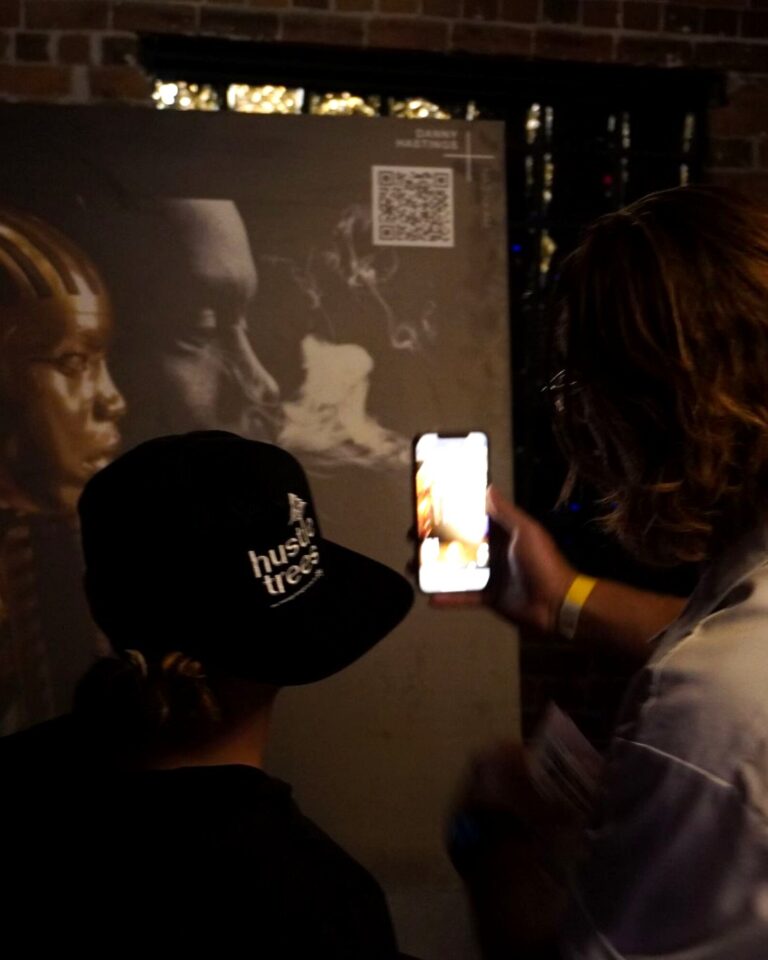
Scanning the QR code on the artwork, Phoenix, 2023
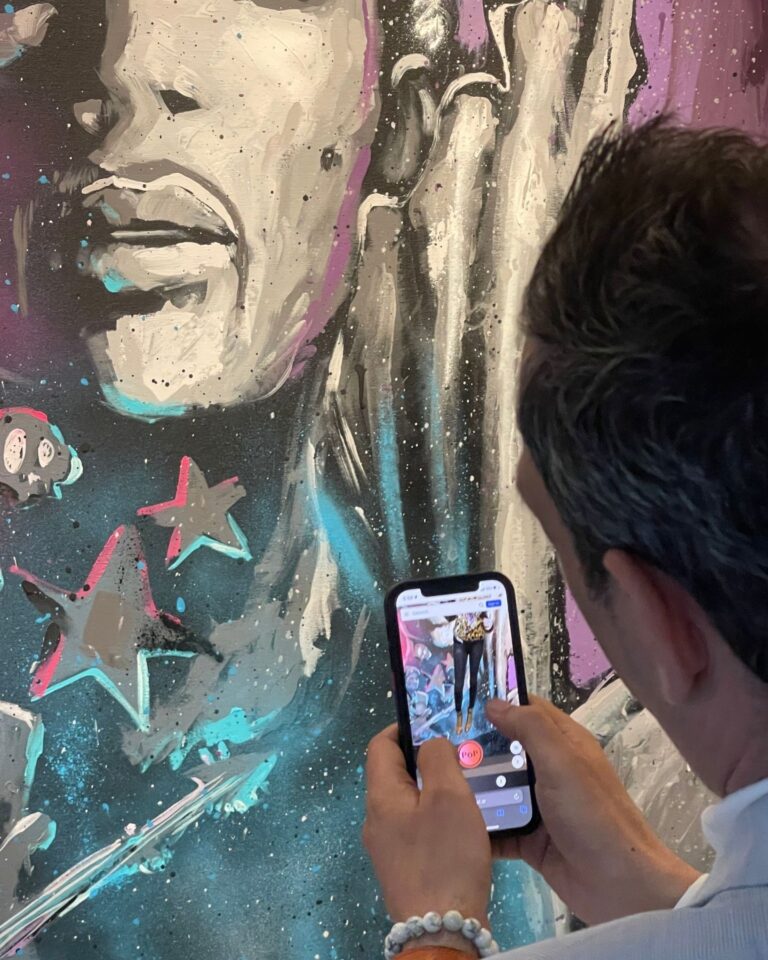
The AR opens over the painting, Four Seasons Westlake Village, 2023
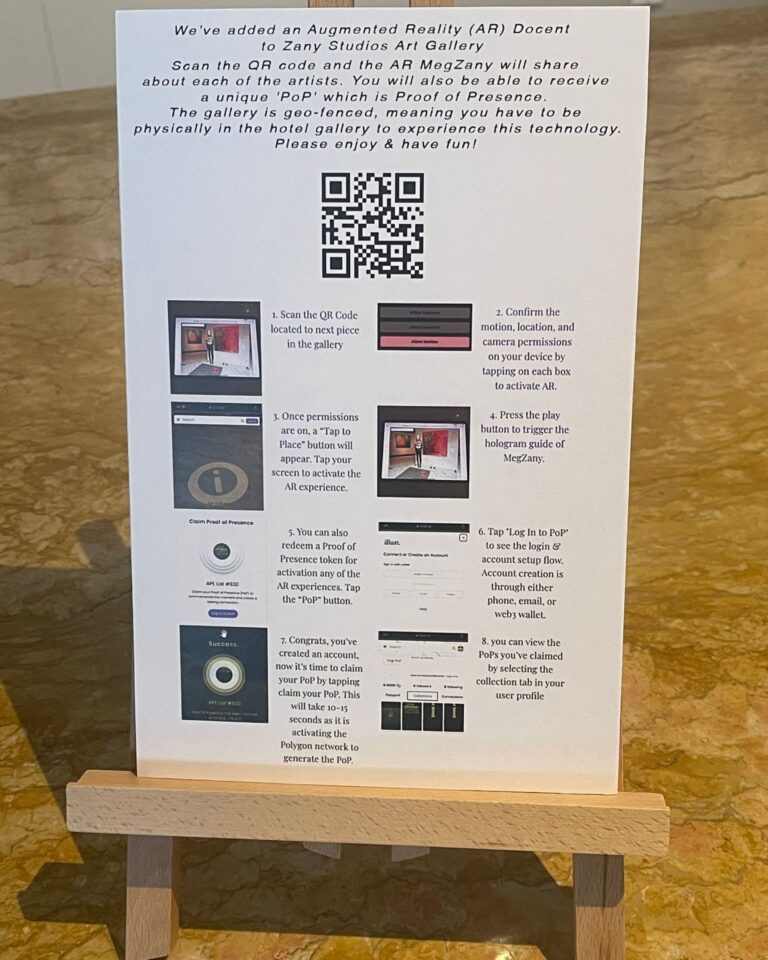
How-to steps beside the art, Four Seasons Westlake Village, 2023
How it works
The QR code only holds a web address. The AR happens on the page it opens, which starts the camera and loads the scene. Good signage tells people what they will see, where to point and to allow camera access.
Use a dynamic QR code for anything you print
A dynamic QR code points to a short link you control, so you can change where it goes after the code is printed. This matters most for permanent installations: a mural, plaque or sign can stay up for years while the experience or web address behind it changes, with no reprinting. Keep the account that manages the code active, because the code stops working if its redirect lapses. illust can set this up for your project.
How it works in illust
Every illust experience gets a shareable link and QR code, and placement packages include a custom AR scene QR code. illust can also set up dynamic links for your project as part of its service, so a printed code keeps working when the scene or its destination changes. Experiences can also open from NFC tags or embedded links.
Key facts
- Any phone camera app can scan a QR code; no special AR app is needed when the destination is WebAR.
Watch

FAQ
Does the QR code need to be next to the art?
For location-based pieces, put it where people should stand. For image targets, it can sit beside the mural or print.
Can I change the AR after printing the QR code?
Yes, as long as the code points to a link you control. Update the scene and the same code opens the new version.
Should I use a static or dynamic QR code?
Use a dynamic code for anything printed, and always for permanent installations. A static code bakes the web address into the pattern, so changing the destination means reprinting it. A dynamic code points to a short link you can redirect at any time.
Can illust set up a dynamic QR code for my project?
Yes. illust can set up dynamic links for your project as part of its service, so you can update the AR or where the code points later without reprinting your QR codes or signs.